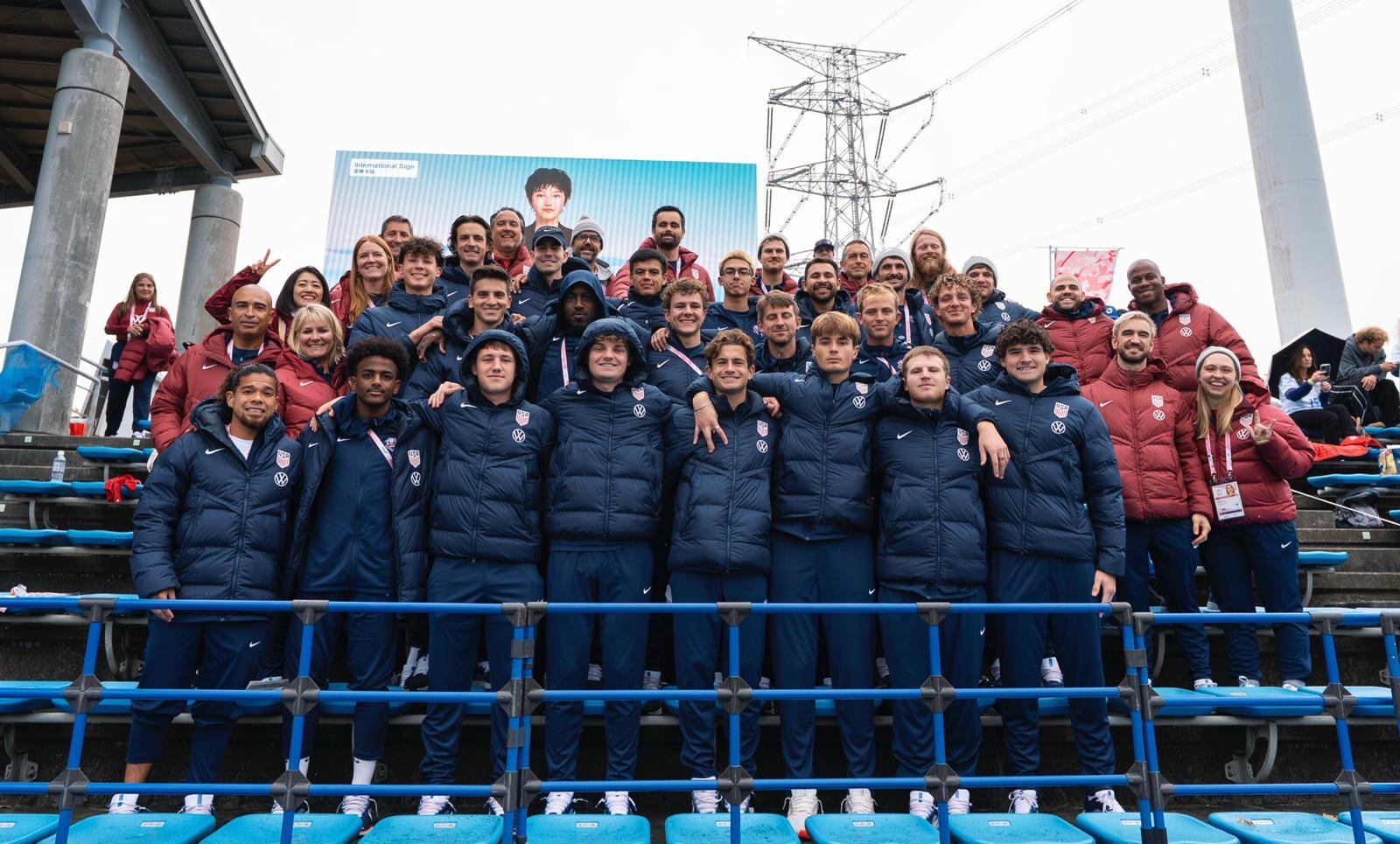
The 2025 Deaflympics represented more than a major international competition—it was the culmination of years of development, resilience, and intentional mental performance work, both as an athlete and a consultant. I have been a member of the U.S. Deaf Men’s National Soccer Team for nine years, earning my first call-up to training camp in 2017 and accumulating 25 international caps.
My first opportunity to compete on the world stage came at the 2019 Deaf Pan American Games, where our team made history by winning the gold medal—the first in U.S. Deaf Men’s Soccer history. Since then, I have continued to represent the United States at the highest level,competing in the 2022 Deaflympics in Brazil, the 2023 DIFA World Deaf Football Championships in Malaysia, the 2024 Deaf Pan American Games in Brazil, and most recently,the 2025 Deaflympics in Japan. With this foundation established, I now turn to the lived experience of the 2025 Deaflympics and the mental demands that shaped my journey from the very beginning.
I had the honor of competing at the 2025 Deaflympics in Tokyo, Japan, representing the U.S.Deaf Men’s National Team—an experience that challenged not only our physical abilities, but also our mental strength, adaptability, and emotional regulation throughout the entire journey.The experience began with an 11-hour flight from Los Angeles and a 15-hour time difference,immediately testing our ability to manage sleep, energy levels, and focus. Adjusting to unfamiliar food, new routines, and the reality of being away from family, partners, and friends for several weeks required intentional mental strategies from the outset.
Our initial days in Tokyo provided a sense of grounding and stability. We trained consistently,shared meals, explored the city together, and connected with the U.S. Deaf Women’s National Team, which helped build team cohesion and reduce pre-competition anxiety. These moments of connection were essential in establishing trust and psychological safety before the intensity of tournament play began. However, just days before our opening match, uncertainty set in.Senegal withdrew from the tournament, our group changed, and our first match was moved up two days, eliminating planned training sessions and forcing us to adapt quickly. These sudden changes highlighted how little control athletes often have over external circumstances and how crucial mental flexibility becomes in high-performance environments.
The schedule change also meant many families could no longer attend the matches, which was emotionally challenging for several players, including myself. While feelings of frustration and disappointment were present, we had to accept what we couldn’t control and refocus on what we could: our preparation, mindset, and response. Our opening match against Ukraine reflected the impact of nerves and disrupted preparation, as we struggled early and fell behind quickly. Rather than dwelling on the loss, we used reflection as a tool to reset, identify lessons, and prepare mentally for the next challenge.
Our response against South Korea showed growth. We played with greater composure,confidence, and communication, earning a strong win while also recognizing the importance of finishing games with discipline. As the tournament progressed, the mental demands increased,tight turnarounds, must-win scenarios, and the pressure of advancing to knockout rounds required sustained focus and emotional control. Defeating Brazil in the quarterfinals, a team that had beaten us previously, was a powerful moment of belief and resilience, reinforcing our confidence as a group. And it was the first time that the U.S. Men’s Deaf National reached the Deaflympics Semifinals.
More adversity followed in the semifinals, as yellow card suspensions forced lineup changes in a high-stakes match against host nation Japan. Earning a start after limited minutes earlier in the tournament required trust in my preparation, confidence in my role, and the ability to manage pressure despite the magnitude of the moment. Although we narrowly lost, quickly shifting our mindset toward the bronze medal match demonstrated the importance of emotional recovery in elite sport. Despite another close loss to France, the tournament represented meaningful growth for our team, highlighted by leadership, adaptability, and shared resilience.
Supporting the women’s team as they captured their fifth gold medal, reconnecting with deaf athletes across Team USA, and reflecting during the closing ceremonies brought perspective to the entire experience. The Deaflympics reinforced that success in sport is not defined solely by medals, but by the ability to navigate uncertainty, respond to adversity, and grow mentally through challenge. Representing the red, white, and blue on the world stage was an unforgettable experience, one that strengthened my understanding of mental performance,resilience, and the power of team connection.